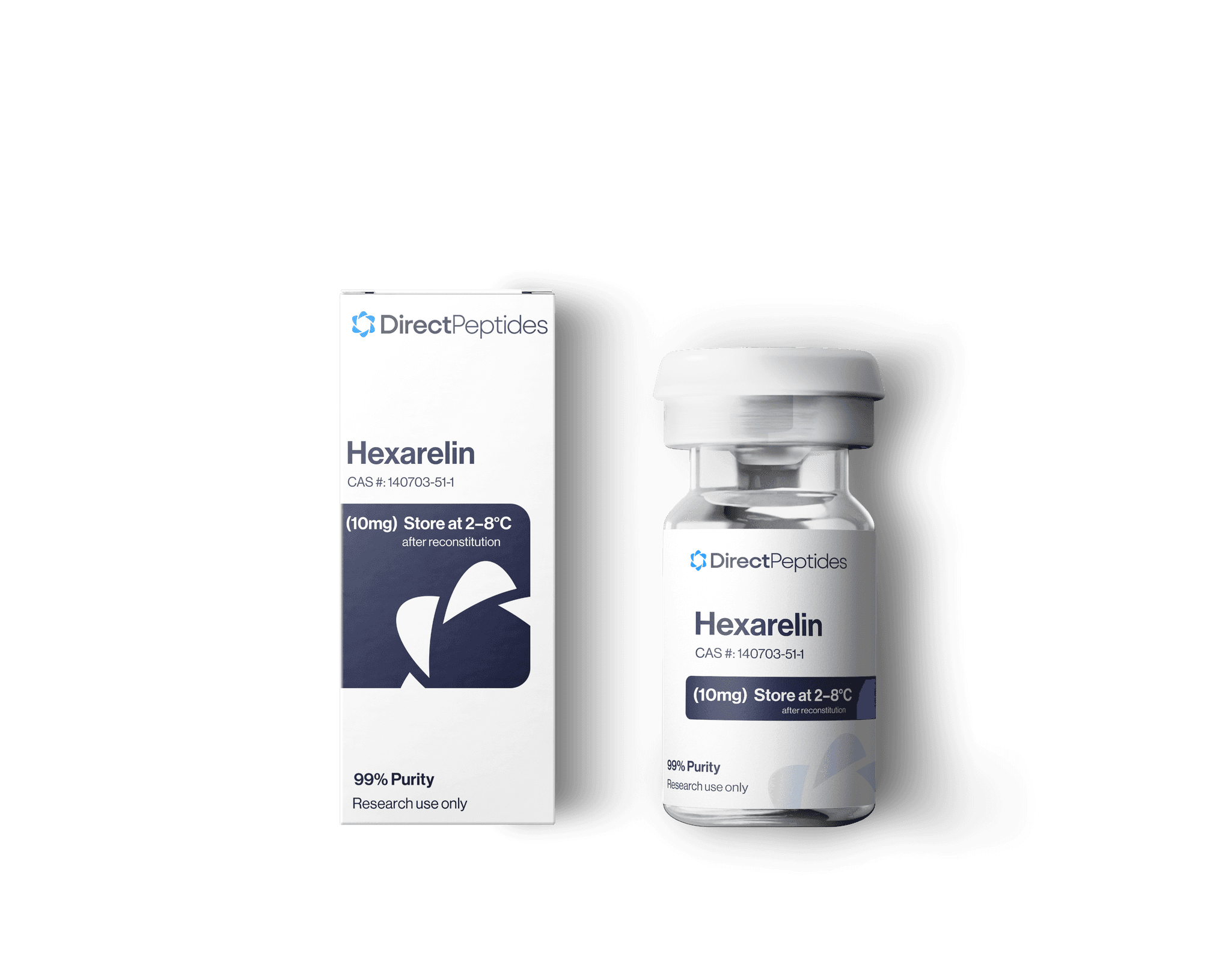
Research Use Only
All products are intended solely for laboratory research and are not for human or animal consumption. By purchasing, the buyer agrees to use these products in compliance with all applicable laws.
Hexarelin functions as a multi-pathway peptide agonist influencing endocrine signaling, downstream cascades, and vascular responses through multiple target receptor pathways. As a synthetic hexapeptide secretagogue-type compound that acts as a potent agonist with enhanced stability and potency compared to natural ligands, Hexarelin demonstrates broad signaling activity. Research models examine Hexarelin's effects on pulsatile dynamics, downstream pathway stimulation, vascular signaling, and endocrine modulation in laboratory and preclinical experimental settings, with particular interest in its vascular and systemic actions.
Hexarelin was developed in the 1990s as part of systematic research into secretagogue-type peptides, following the identification of GHRP-6 and other early compounds in this class. Synthesized to optimize signaling potency and duration of action, Hexarelin emerged as one of the most potent synthetic secretagogue compounds. Subsequent research revealed its unexpected vascular signaling effects independent of the somatotroph axis, leading to expanded investigation of its vascular pathway applications.
Hexarelin Structure
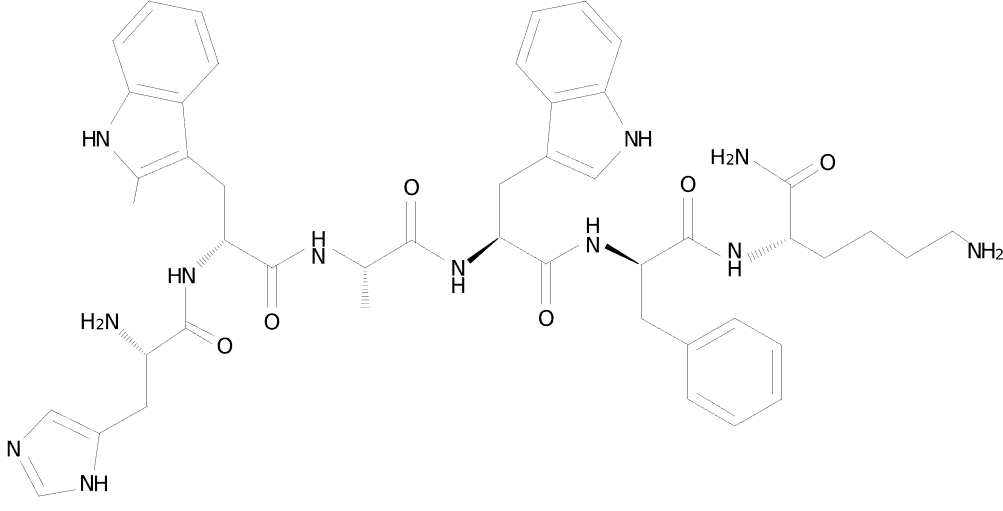
CAS#: 140703-51-1
Molecular Formula: C₄₇H₅₈N₁₂O₆
Molecular Weight: 887.04 g/mol
PubChem ID: 6918245
Hexarelin has been investigated in secretagogue research and vascular pharmacology studies, with particular focus on target pathway activation, vascular signaling mechanisms, endocrine effects, and multi-system signaling responses in experimental models and assay-based systems.
Key Areas of Research:
Endocrine: Somatotroph axis, signaling, cascades
Vascular: Signaling, remodeling, pathway dynamics
Systemic: Lipid pathways, substrate dynamics, markers
Pharmacology: Target binding, dual pathway, distribution
Together, these findings demonstrate Hexarelin's versatility as a research compound across endocrine, vascular, and systemic pathways. Through dual pathway engagement, Hexarelin provides a unique experimental platform for studying somatotroph axis modulation, vascular signaling mechanisms, and integrated endocrine-vascular dynamics in diverse research settings.
References
Our Process


Text us, our dedicated team is here to help

Frequently Asked Questions
Everything you need to know about our products and processes.
What's the actual amount in each vial?
Are additional supplies needed?
How long does a vial last?
Does the product come with instructions?
How should I store these products?
