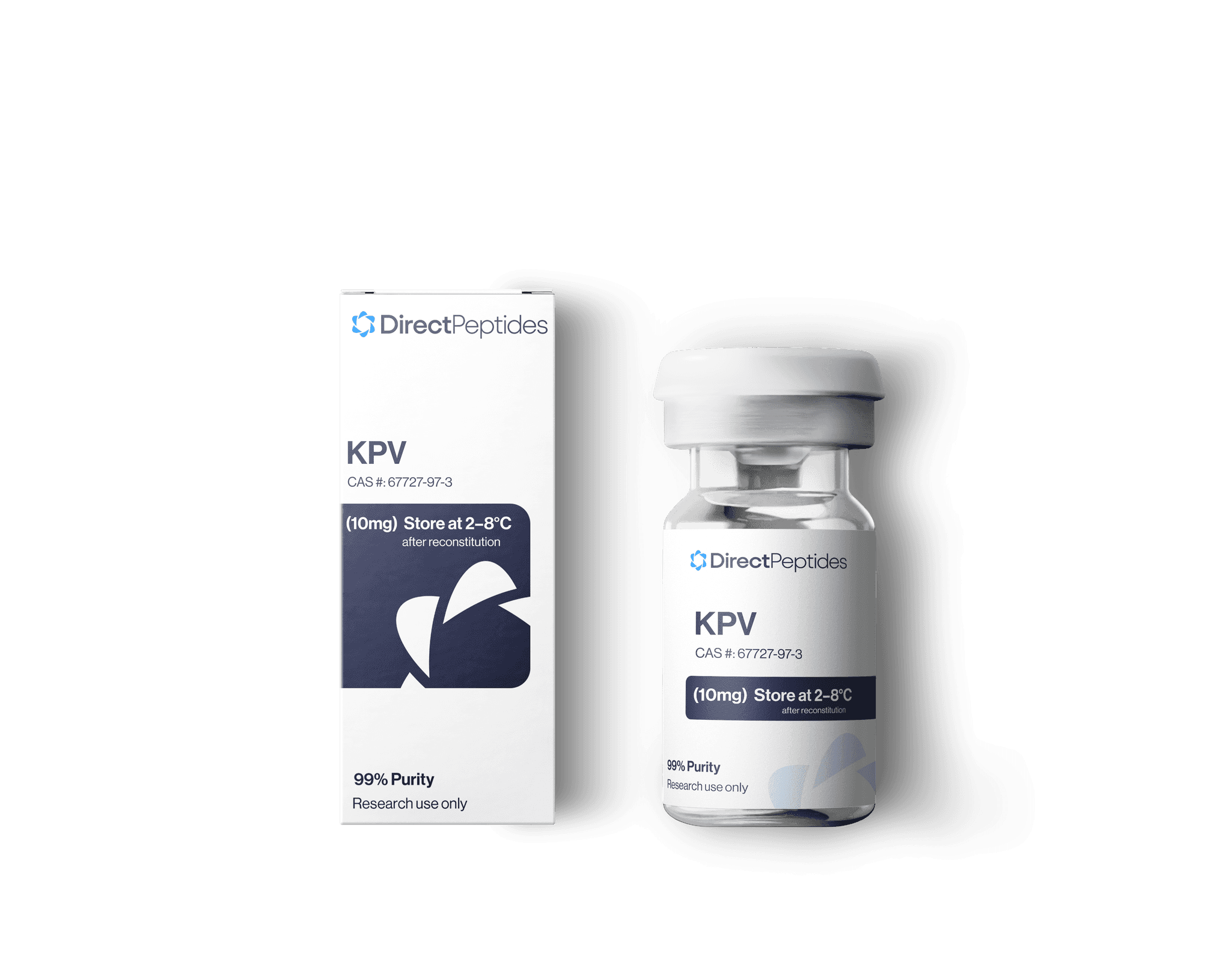
Research Use Only
All products are intended solely for laboratory research and are not for human or animal consumption. By purchasing, the buyer agrees to use these products in compliance with all applicable laws.
KPV is a small tripeptide derived from the C-terminus of α-MSH that retains signaling activity while lacking melanotropic effects. Through PepT1-mediated uptake in epithelial and macrophage models, KPV directly accesses intracellular compartments where it modulates NF-κB signaling and reduces expression of key cytokines including TNF-α, IL-1β, IL-6, and IL-8. Research models examine KPV's effects on cytokine signaling cascades, epithelial barrier dynamics through tight junction protein regulation, mucosal modeling in experimental systems, and antimicrobial properties in laboratory settings.
KPV has been extensively studied in cytokine signaling research, with investigations focusing on NF-κB pathway modulation, epithelial signaling models, barrier dynamics, and immune modulation in various experimental systems. Studies examine both its unique transporter-mediated delivery and potent cytokine-modulating mechanisms.
Key Areas of Research:
Cytokine: NF-κB, MAPK, suppression
Epithelial: Mucosal signaling, modeling
Barrier: Tight junction, permeability, integrity
Immune: Peptide-receptor, macrophage, T-cell
Together, these investigations demonstrate KPV's multifaceted cytokine-modulating actions through PepT1-mediated uptake and direct intracellular signaling modulation. As a minimal bioactive sequence, KPV provides a research framework for examining peptide-based cytokine mechanisms, epithelial immune signaling, and barrier dynamics in diverse experimental models.
Dalmasso et al., Gastroenterology, 2008
Brzoska et al., Inammation Research, 2008
Getting et al., Journal of Pharmacology and Experimental Therapeutics, 2003
References
Our Process


Text us, our dedicated team is here to help

Frequently Asked Questions
Everything you need to know about our products and processes.
What's the actual amount in each vial?
Are additional supplies needed?
How long does a vial last?
Does the product come with instructions?
What purity level is guaranteed?
How should I store these products?
