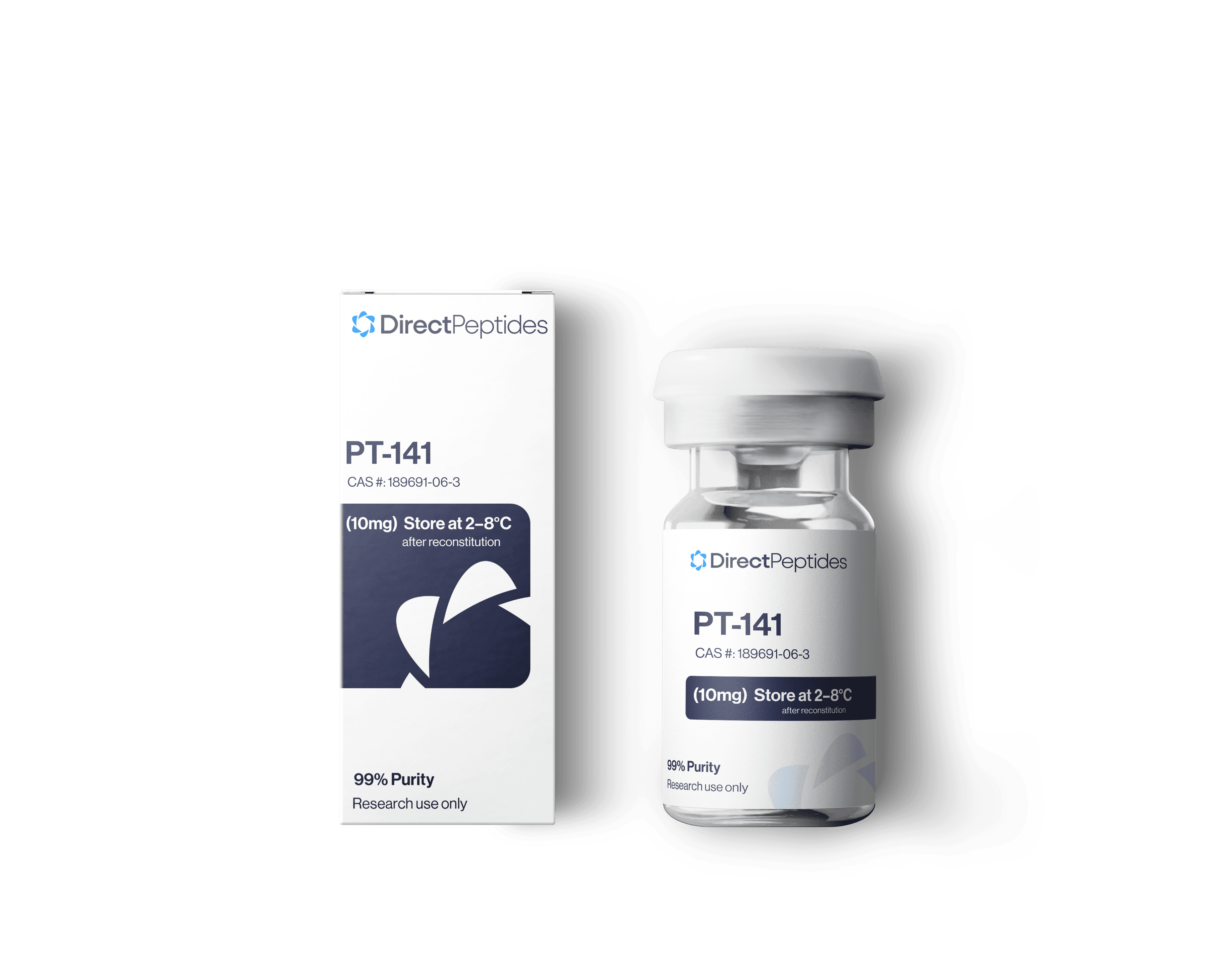
Research Use Only
All products are intended solely for laboratory research and are not for human or animal consumption. By purchasing, the buyer agrees to use these products in compliance with all applicable laws.
PT-141, also known as Bremelanotide, is a synthetic peptide analog of α-melanocyte-stimulating hormone (α-MSH). It is studied in laboratory and preclinical models for its ability to activate melanocortin receptors (MC3R and MC4R), which are involved in neuroendocrine signaling, energy regulation, and vascular pathways.
PT-141 was developed through research into melanocortin-class peptides, originally derived from modifications of Melanotan II. While Melanotan II was primarily studied for its pigmentation pathway properties, PT-141 was synthesized to focus on central target receptor activity. Since its discovery, PT-141 has been investigated in models of neuroendocrine function, vascular signaling, and peptide-receptor dynamics.
Shadiack A.M. et al. (2002).
PT-141 Structure
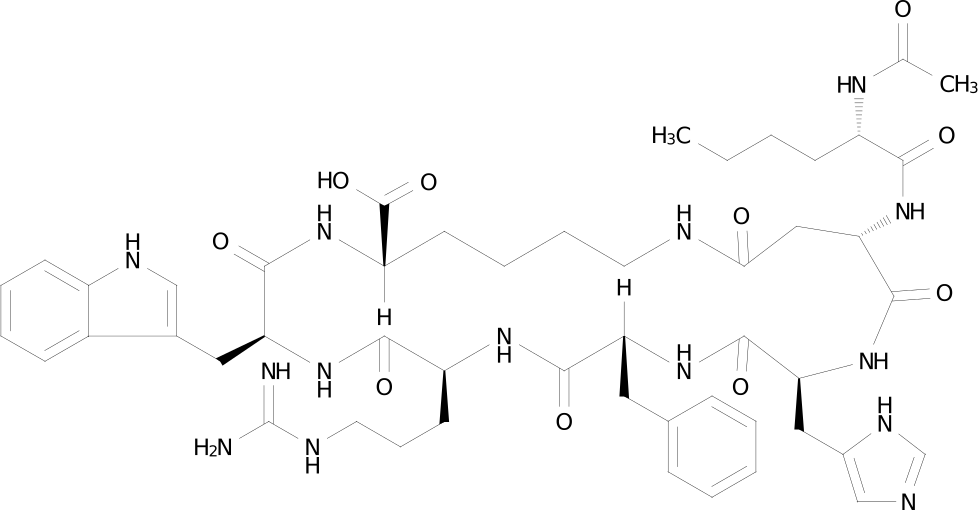
CAS #: 189691-06-3
Molecular Formula: C₅₀H₆₈N₁₄O₁₀
Molecular Weight: 1025.2 g/mol
PubChem ID: 6918280
PT-141 has been studied in neurological, endocrine, and systemic models, with research highlighting its activity in target receptor pathways, neuroendocrine signaling, and systemic dynamics. Studies also report effects on central nervous system activity, endocrine modulation, and vascular responses in preclinical settings.
Key Areas of Research:
Neurological: CNS activity, signaling, pathways
Endocrine: Modulation, signaling dynamics
Systemic: Vascular responses, viability, resilience
Together, these findings suggest experimental potential for PT-141 across neurological, endocrine, and systemic pathways. By engaging target receptor pathways and influencing neuroendocrine activity, PT-141 provides a versatile platform for research into signaling biology, systemic dynamics, and central pathway characterization in laboratory settings.
References
Our Process


Text us, our dedicated team is here to help

Frequently Asked Questions
Everything you need to know about our products and processes.
What's the actual amount in each vial?
Are additional supplies needed?
How long does a vial last?
Does the product come with instructions?
How should I store these products?
