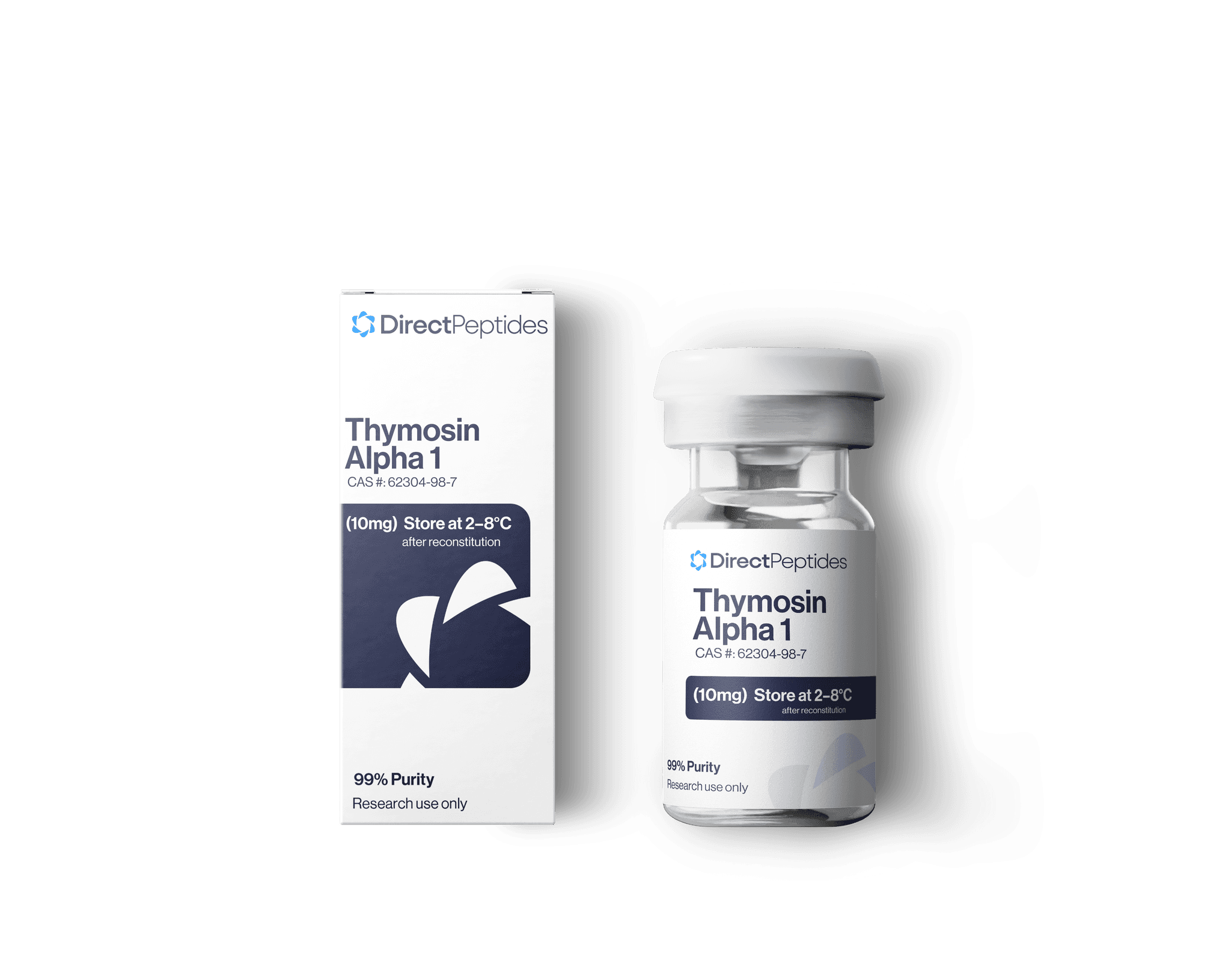
Research Use Only
All products are intended solely for laboratory research and are not for human or animal consumption. By purchasing, the buyer agrees to use these products in compliance with all applicable laws.
Thymosin Alpha 1 functions as a potent immunomodulator that influences signaling dynamics, cytokine expression, and immune pathway homeostasis. As a naturally occurring 28-amino acid peptide originally isolated from thymic tissue, Tα1 has been studied for its role in thymocyte signaling, immune pathway differentiation, and innate and adaptive response regulation. Through toll-like receptor (TLR) pathway activation and signaling modulation, Tα1 has been investigated in research models examining thymocyte dynamics, dendritic signaling, natural killer pathway activity, and multi-system immune responses in laboratory settings.
Thymosin Alpha 1 was first isolated and characterized from bovine thymus gland in the 1970s by Allan Goldstein and colleagues at George Washington University. This peptide was identified as the primary active component of thymosin fraction 5, a crude thymic extract with immunological activity. Subsequent research established its role in thymocyte differentiation and led to development as thymalfasin for continued experimental investigation.
Thymosin Alpha 1 Structure

CAS#: 62304-98-7
Molecular Formula: C₁₂₉H₂₁₅N₃₃O₅₅
Molecular Weight: 3108.28 g/mol
PubChem ID: 16132341
Thymosin Alpha 1 has been examined in immunology research focusing on thymocyte signaling, cytokine modulation, toll-like receptor signaling, and age-associated immune pathway changes in various experimental models. Studies investigate its effects on lymphocyte populations, dendritic signaling, and immune pathway dynamics across different experimental contexts.
Key Areas of Research:
Thymocyte: Maturation, CD4/CD8, thymic dynamics
Immunomodulation: Cytokine, dendritic, IFN-γ
Pathway: TLR, receptor expression, antigen
Systemic: NK activity, age-associated, signaling
Together, these investigations reveal Tα1's broad immunomodulatory properties across immune signaling pathways and experimental systems. Through TLR-dependent and independent mechanisms, Tα1 serves as a research tool for examining immune pathway dynamics, differentiation cascades, and age-associated signaling changes in preclinical models and assay-based systems.
References
Our Process


Text us, our dedicated team is here to help


Frequently Asked Questions
Everything you need to know about our products and processes.
What's the actual amount in each vial?
Are additional supplies needed?
How long does a vial last?
Does the product come with instructions?
How should I store these products?
