Education
Peptide Research
Melanocortin Agonists: Mechanisms and Research Findings
What Are Melanocortin Agonists?
Melanocortin agonists are compounds that bind to and activate receptors of the melanocortin system, a family of G-protein–coupled receptors (MC1R–MC5R). These receptors are widely distributed across tissues and influence pigmentation, energy balance, immune responses, and endocrine signaling. Agonists may be natural peptides such as α-MSH (alpha-melanocyte-stimulating hormone) or synthetic analogs designed to study receptor function.
How Have They Been Studied?
Research on melanocortin agonists spans diverse models:
In vitro studies explore receptor binding, downstream cAMP signaling, and selectivity across receptor subtypes.
Animal models investigate roles in appetite regulation, pigmentation, adrenal function, and inflammation.
Human studies have measured responses such as skin pigmentation, metabolic markers, and endocrine hormone changes.
Key Mechanisms Identified
Published work highlights several mechanisms by which melanocortin agonists act:
MC1R Activation – Regulates skin and hair pigmentation by stimulating melanin production in melanocytes.
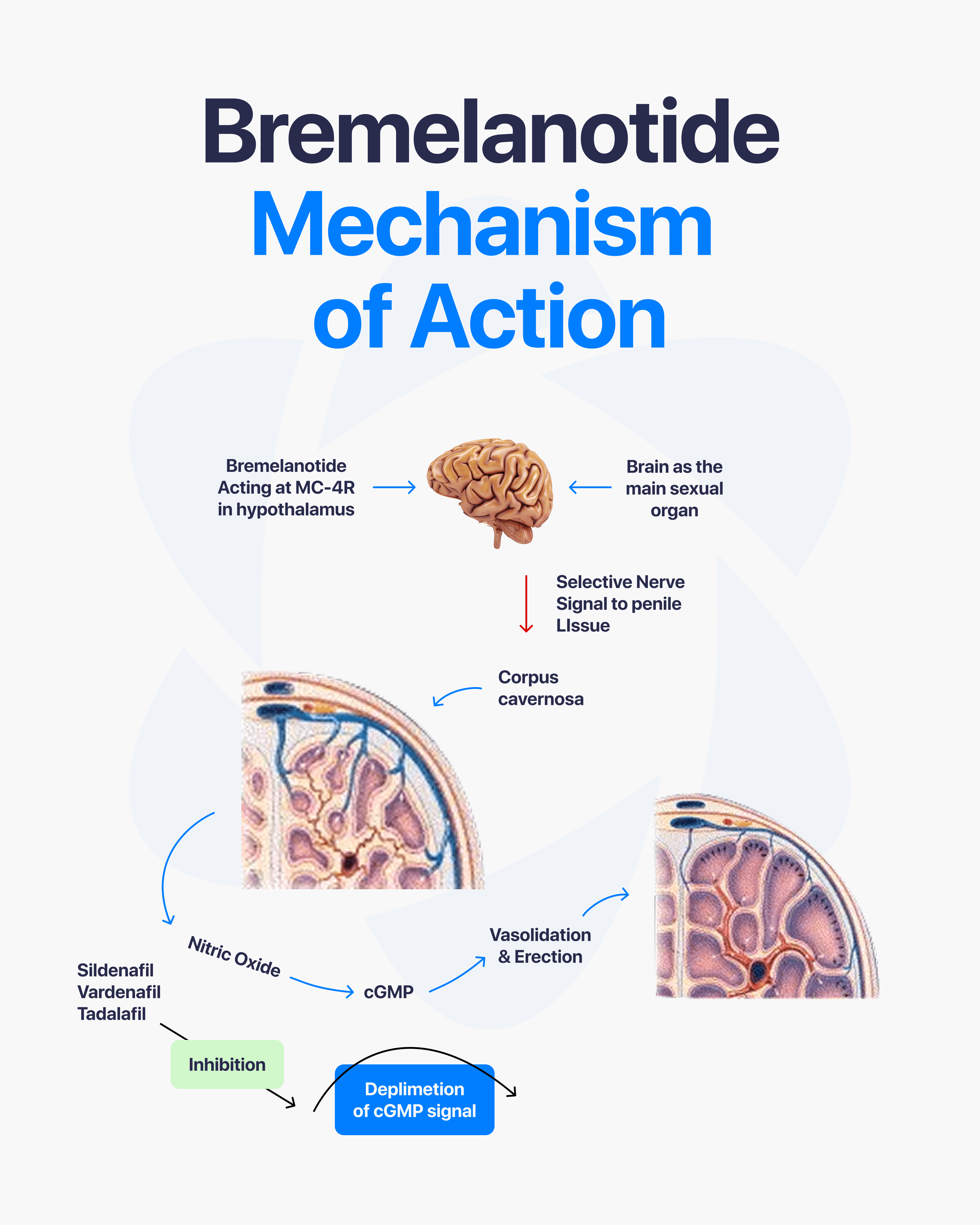
MC3R and MC4R – Involved in energy balance and feeding behavior, studied extensively in rodent models of appetite regulation.
MC2R – The receptor for ACTH (adrenocorticotropic hormone), central to adrenal cortisol production.
MC5R – Linked to exocrine gland function, such as sebaceous gland activity.
Research Findings So Far
Studies have reported a range of experimental observations:
Pigmentation Pathways – Synthetic melanocortin analogs can increase melanin output in cultured melanocytes.
Energy Homeostasis – Agonists of MC4R in rodents influence feeding circuits, often studied in the context of hypothalamic signaling.
Anti-Inflammatory Effects – In vitro and in vivo models show reduced inflammatory signaling when melanocortin receptors are activated, pointing to potential roles in immune modulation.
Endocrine Responses – ACTH analogs targeting MC2R are routinely used to study adrenal steroid production.
(Reference: Catania et al., 2004)
References
All products sold by Direct Peptides are strictly for laboratory research purposes only. They are not intended for human or animal consumption, medical, or therapeutic use. The information provided on this website is for educational and informational purposes only.
